
InternLM / Spatial-SSRL
[CVPR 2026] Official release of "Spatial-SSRL: Enhancing Spatial Understanding via Self-Supervised Reinforcement Learning"
Why this job: says: reinforcement learning
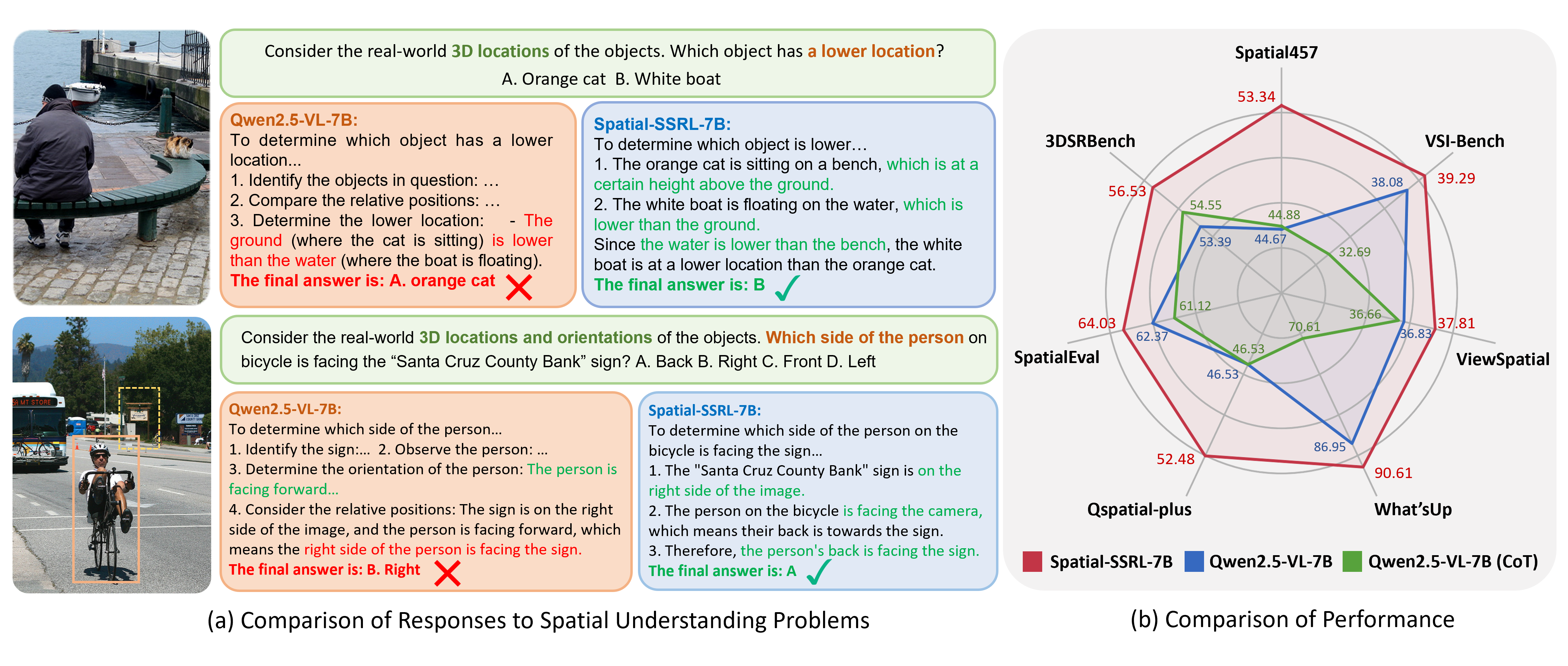
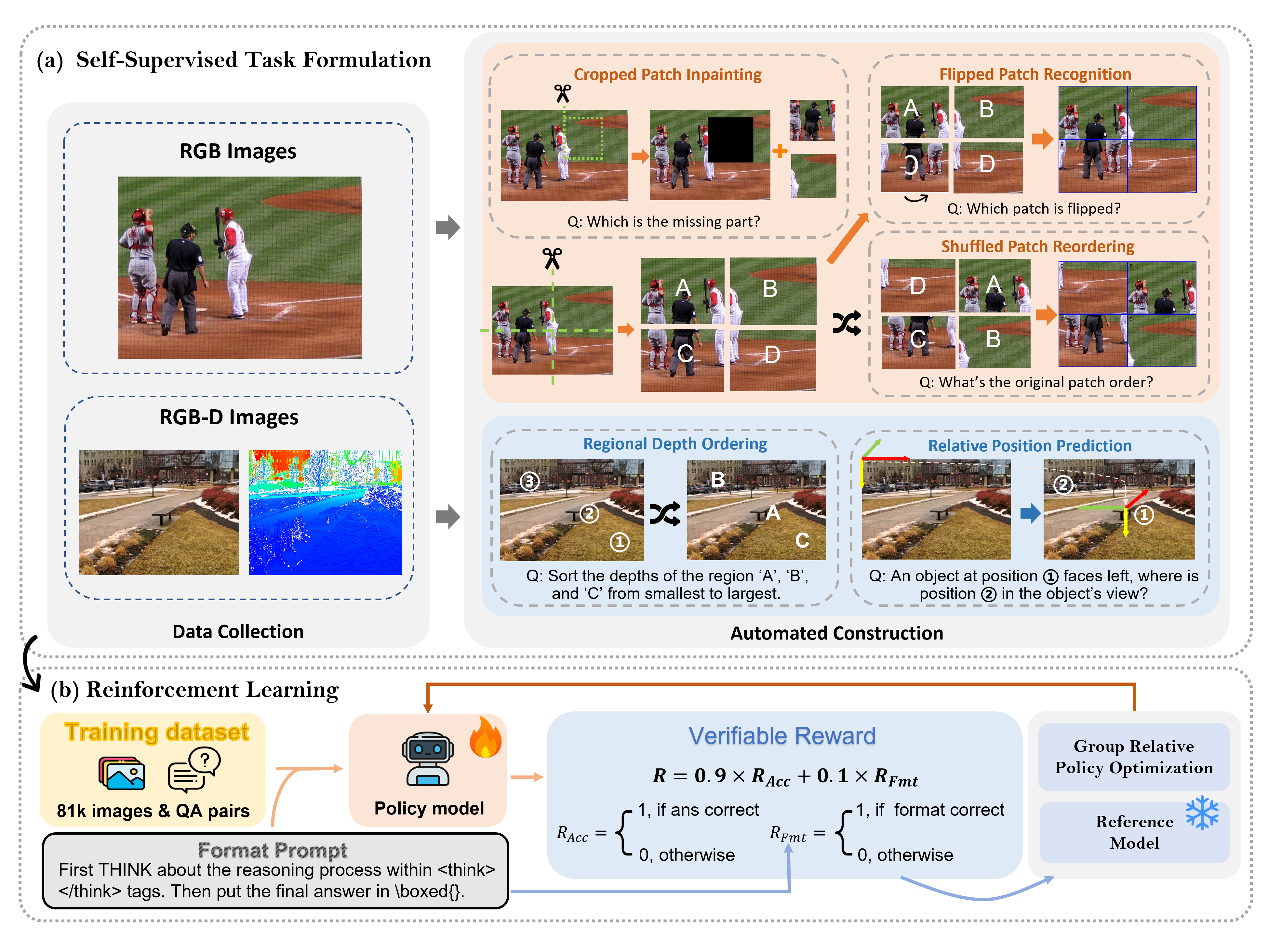
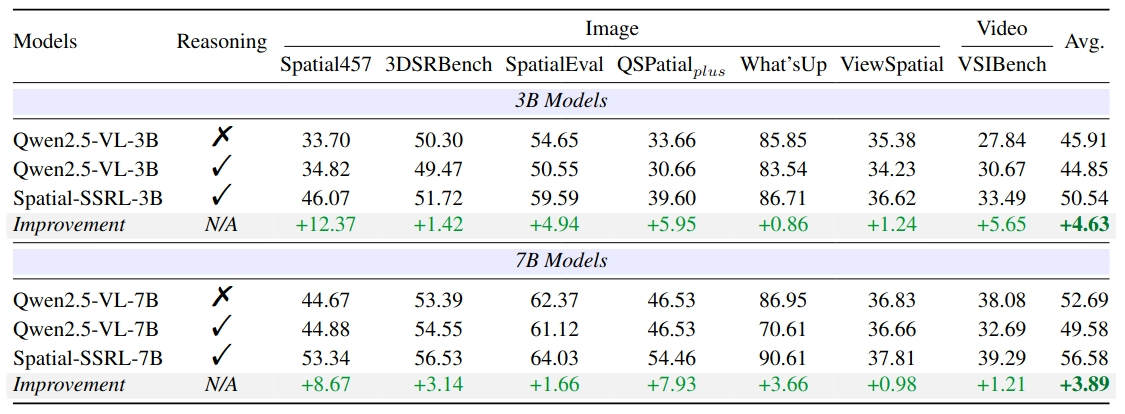
What it does
- Highly Scalable. Spatial-SSRL uses ordinary raw RGB and RGB-D images instead of richly-annotated public datasets or manual labels for data curation, making it highly scalable.
- Cost-effective. Avoiding the need for human labels or API calls for general LVLMs throughout the entire pipeline endows Spatial-SSRL with cost-effectiveness.
- Lightweight. Prior approaches for spatial understanding heavily rely on annotation of external tools, incurring inherent errors in training data and additional cost. In constrast, Spatial-SSRL is completely tool-free and can easily be exten
- Naturally Verifiable. Intrinsic supervisory signals determined by pretext objectives are naturally verifiable, aligning Spatial-SSRL well with the RLVR paradigm.
Get started
No single install command. Read the steps in the README (opens in new tab)
- Maintenance
- Active
- Last commit 28 days ago
- Stars
- 141
- On GitHub
- Licence
- Apache-2.0
- Allows business use
- Downloads for
- None listed
- No release files
- Latest version
- None yet
- No releases
- Built with
- Python
- 99% of the code
Is it looked after?
- Contributors
- Not stated
- Last 90 days
- Issues
- 100% closed
- 0 still open
- Pull requests
- 0 merged
- 0 waiting
- Releases
- None
- Never published
- No contributing guide
- No security policy
- No code of conduct
More: languages, topics and project record
Languages
- Python 99%
- Jupyter Notebook <1%
- Shell <1%
- Dockerfile <1%
Topics
- spatial-understanding
- 3d-understanding
- large-language-models
- large-vision-language-models
- llm
- vision-language-model
- vlm
Project record
- JobFine-tuning
- StatusListed
- Commits78
- Forks4
- Watching3
- Stars in 28 days0
- CreatedOct 29, 2025
- First seen by usNov 7, 2026
- CheckedNov 8, 2026